
Glade AI vs CounselPro: Which is Better for Bankruptcy Firms? (May 2026)

CounselPro generates strong financial analysis, then stops. Your staff carries those findings into petition software, client files, and payment systems manually. If you're comparing bankruptcy software between the two, the gap isn't in document analysis depth. It's in what happens after the analysis is done.
TLDR:
- Glade automates full case workflows with AI agents that handle intake to filing automatically.
- CounselPro functions as a financial analysis tool requiring separate systems for case management.
- Glade includes native payments and client portals; CounselPro offers neither.
- Glade unifies bankruptcy workflows in one system built for Chapter 7 and Chapter 13.
What is CounselPro?
CounselPro is a bankruptcy case management software built for consumer bankruptcy attorneys. It covers the core administrative tasks that define the day-to-day of a bankruptcy practice: client intake, document generation, court filing, and deadline tracking.
The software has been in the market long enough to build a recognizable name among solo practitioners and small firms, particularly those filing Chapter 7 and Chapter 13 cases at volume. Its workflow structure is largely form-based, walking attorneys and paralegals through the steps of a case in a linear sequence.
CounselPro sits in a category of tools that predate the current wave of AI-assisted legal software. It was designed around consistency and compliance instead of automation or intelligent case handling, which shapes both its strengths and its ceiling.
What is Glade?
Glade is built to replace the patchwork of disconnected tools most bankruptcy firms depend on. Case management, AI agents, and native payments come together in one unified operating system so nothing falls through the cracks between software.
Where CounselPro organizes steps, Glade automates them. AI agents run intake qualification, chase missing documents, pre-populate petition fields, send payment reminders, and flag items that need attorney review. The attorney steps in at decision points. Everything else runs in the background.
The result is a firm that can process more cases without growing headcount at the same rate. Here is how that looks in practice:
- Intake flows directly into case workflows, so no data entry is repeated.
- Cases automatically trigger document requests without paralegal follow-up.
- Documents feed petition preparation as soon as they arrive.
- Invoices generate automatically at the right stage of each case.
What used to require hours of follow-up becomes a quick dashboard review.
Case Management and Workflow Automation
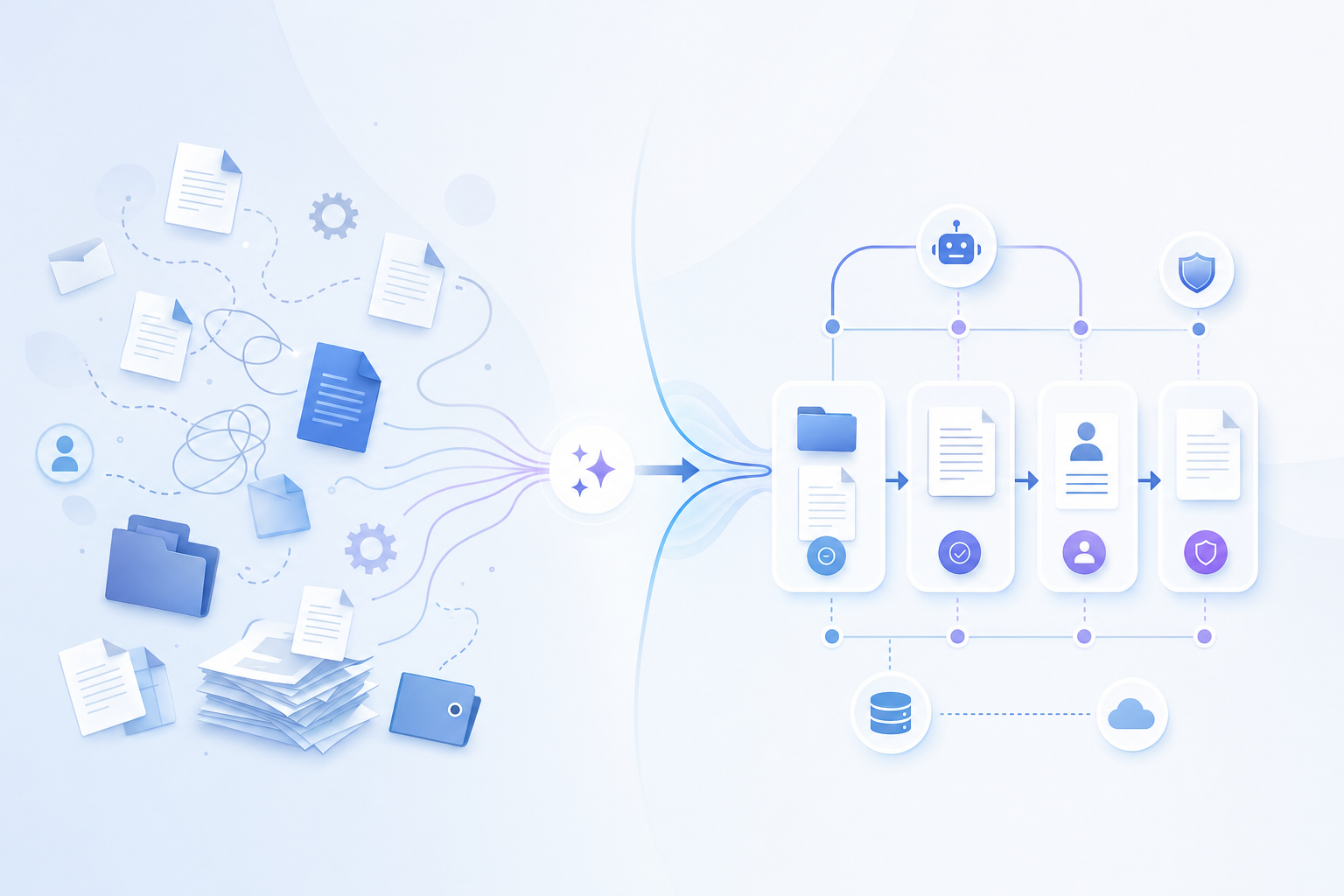
CounselPro operates as a financial analysis tool, not a case management system. Firms still need separate software for case tracking, client communication, and document management. After CounselPro generates its reports, attorneys manually carry those findings into petition prep software and client files. Every handoff is a manual step someone has to remember. This creates the same case management integration challenges that plague most legal software stacks.
Glade takes a different approach by chaining building blocks together into end-to-end case workflows. Credit report pulls, document requests, form collection, and invoicing all trigger in sequence with staff keeping final review.
The Cases Feature
Glade's Cases feature links multiple related workflows into a single unit, so a business client with both entity and personal filings stays organized in one place. Data moves from intake through filing without re-entry.
AI Capabilities and Financial Analysis
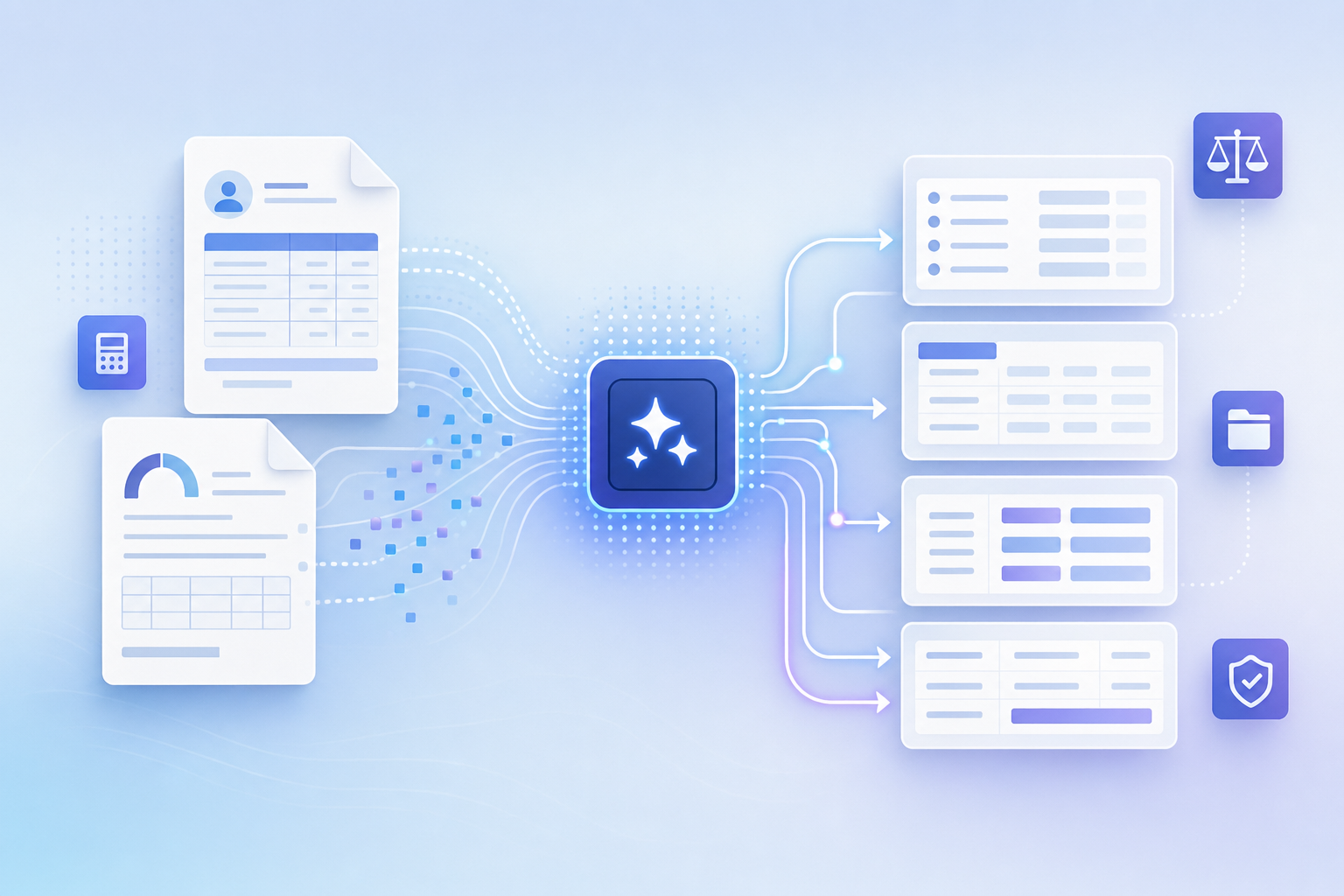
Glade's AI agents work across the entire case lifecycle. Paystub analysis extracts income at the cell level, identifying gross pay, tax deductions, retirement contributions, and withholdings, then writes that data directly into bankruptcy schedules and means test calculations. Credit reports pull automatically. Schedule D populates from creditor data without manual entry.
CounselPro's AI does one thing well: financial document analysis. It categorizes transactions, surfaces unusual spending patterns, flags hidden assets, and accepts natural language queries against financial PDFs. For fraud detection or asset tracing, that depth is real. But the AI stops there. AI summarization for bankruptcy documents is valuable, but petition drafting, client follow-ups, and document collection still fall on your staff.
Where the Gap Shows Up
- Paystub and credit report data in Glade writes directly into schedules and means test calculations, skipping manual re-entry entirely.
- CounselPro's financial analysis is genuinely strong, but it functions as a standalone tool instead of part of a connected case workflow.
- Client-facing tasks like follow-ups and document reminders are handled by Glade's AI agents automatically, not added to a staff queue.
Bankruptcy-Specific Features
Bankruptcy law has specific workflow demands that generic legal software rarely handles well. The right tool needs to account for means testing, exemption analysis, creditor matrix management, and court-specific filing requirements across jurisdictions.
Glade
Glade is built exclusively for bankruptcy attorneys. Its AI agents handle means test calculations, draft petition documents, manage creditor matrices, and track deadlines tied to the bankruptcy timeline. Case workflows are structured around Chapter 7 and Chapter 13 distinctions from the start, so attorneys aren't retrofitting a general case management tool to fit bankruptcy logic.
CounselPro
CounselPro offers bankruptcy-adjacent features, including document templates and deadline tracking, but its architecture is not bankruptcy-first. Attorneys working high-volume consumer bankruptcy caseloads often find they need to customize the tool extensively to match their actual workflows.
Feature | Glade | CounselPro |
|---|---|---|
Means test automation | Yes | Limited |
Chapter 7 / 13 workflows | Native | Configurable |
Creditor matrix management | Yes | Partial |
Court-specific filing rules | Yes | Varies by jurisdiction |
AI agents for petition drafting | Yes | No |
Client Portal and Payment Processing
CounselPro has no client-facing features. There is no portal, no document submission interface, and no payment tools. Every client touchpoint runs through separate systems your staff manages manually.
Glade's client portal covers the full client experience. Clients upload documents from their phones, complete forms with smart pre-fills, and check real-time case status without calling your office. Native Stripe and Confido integrations collect retainers at intake, set up automated payment plans, and flag delinquencies with staff keeping final review. Firms using native payments typically see faster collection cycles because payments happen as part of case workflows, not as a separate follow-up task your office manager has to remember.
Integration Ecosystem and System Architecture
Glade connects with the tools bankruptcy attorneys already rely on. PACER integration pulls case data directly, removing the need for manual docket checks. The system also syncs with credit bureaus, court filing systems, and document storage tools like Google Drive and Dropbox.
CounselPro takes a more self-contained approach. Its integrations are narrower, covering basic document storage and some court filing connections, but it lacks the depth of PACER-native data pulling that saves attorneys meaningful time during case intake and preparation.
Where the two products separate most clearly is architecture. Glade is built around AI agents that work across case workflows automatically. CounselPro relies more on attorney-driven manual steps.
- Glade connects natively to PACER, credit bureaus, and major document storage tools.
- CounselPro covers basic filing and storage connections but requires more manual data entry.
- Glade's AI agents run automatically across case workflows, reducing the need for attorney intervention at each step.
Why Glade is the Better Choice
CounselPro fills a specific role well. If your practice focuses on financial forensics, asset tracing, or fraud analysis, its document analysis capabilities are genuinely valuable as a standalone tool.
But most bankruptcy firms don't need a forensic analyst. They need a system that runs the whole case, from first call to filed petition, without four separate tools and twice the staff time.
Glade does that. One unified system covers intake, case management, document collection, petition prep, billing, and client communication. Cases scale. Manual handoffs disappear. Payments happen automatically as part of case workflows.
Here's what that looks like in practice:
- Intake to petition prep happens inside a single set of case workflows, so nothing falls through the cracks between tools.
- AI agents handle client follow-ups and document requests with staff keeping final review.
- Native payments are built into the workflow itself, not added on as a separate step.
For firms handling volume, that difference compounds fast.
FAQ
How should I decide between Glade and CounselPro for my bankruptcy practice?
If you run a high-volume consumer bankruptcy practice and need a system that handles the entire case lifecycle (intake, document collection, petition prep, billing, and client communication), Glade is the clear fit. CounselPro works best as a specialized financial analysis tool for practices focused on fraud detection or asset tracing, but it requires separate systems for case management and client interaction.
What's the main difference between how Glade and CounselPro handle petition preparation?
CounselPro generates financial analysis reports that attorneys manually transfer into petition preparation software and client files. Glade automatically writes data from paystubs, credit reports, and client documents directly into bankruptcy schedules and means test calculations without re-entry, then triggers the next workflow step with staff keeping final review.
Which firms get the most value from Glade's unified approach?
Firms processing 50+ cases per month where paralegals spend most of their day on follow-ups, document chasing, and data entry between disconnected tools. If your team runs Best Case for filing, QuickBooks for billing, email for client communication, and spreadsheets for payment tracking, Glade replaces the rest of that stack with one system that integrates with QuickBooks, where data flows automatically from intake through filing.
Can I migrate from CounselPro to Glade without disrupting active cases?
Yes, though the transition involves moving from a financial analysis tool to a full case management system. Glade's client success team helps map your current workflows into the system and can run parallel systems during migration so active cases continue without interruption while your team learns the new system.
Does Glade handle court-specific filing requirements across different jurisdictions?
Yes. Glade includes district template management that maps client documents to jurisdiction-specific filing requirements automatically, so your team doesn't maintain separate checklists for each court. CounselPro's court filing support varies by jurisdiction and typically requires manual configuration.
Final Thoughts on Selecting Bankruptcy Case Management Software
If CounselPro vs Glade is your final decision, think about what your firm actually needs to run more cases without hiring more staff. CounselPro offers strong financial analysis but leaves you managing separate tools for intake, document requests, and client communication. Glade connects all of those into one system where AI agents handle the repetitive work automatically. Most bankruptcy attorneys find they can double their caseload when software removes manual data transfer and client follow-ups from their team's plate. Book a demo and we'll walk you through how Glade fits your specific practice.