Best Legal AI Platforms for Lawyers: November 2026

There's a real gap between AI that answers your questions and AI that runs your cases. Research copilots and drafting assistants are handy, but they don't touch intake, payments, or court e-filing. So your firm ends up managing the sprawl. If you want to consolidate your stack instead of feeding it, this comparison of seven leading legal AI platforms and systems shows you which tools go the full distance and which stop at the first draft.
TL;DR
- Legal AI systems split between single-task assistants (research, drafting) and full case operating systems that run intake through filing.
- Start by looking at how each tool handles your highest-volume case type, whether AI is native or bolted on, and court-filing integration.
- Harvey, CoCounsel, and Lexis+ with Protégé focus on research and drafting; Clio and MyCase add AI to horizontal case management.
- None of the other five automate intake-to-filing, native schedule population, or direct court e-filing.
- Glade AI runs bankruptcy cases end to end, from intake through filing.
What Are Legal AI Systems? A 2026 Overview
Legal AI systems apply legal AI practice applications and broader practice to the work that fills a law firm's day: reviewing documents, drafting filings, running research, handling intake, and managing cases. Instead of treating AI as a bolt-on, these tools sit inside the workflows attorneys and staff already run.
The category is wide. On one end sit research assistants and drafting copilots that answer questions or produce first-pass documents. On the other end sit full case operating systems that automate entire workflows end to end, from intake through filing, a model reviewed in depth in law automation benefits and use cases. Glade AI lives at that second end, built vertical-deep for one practice area instead of spread thin across all of them.
How We Ranked Legal AI Platforms
We built this ranking from publicly available product documentation and vendor sites, not a hands-on trial. It reflects Glade AI's perspective on what matters to high-volume firms. For a deeper look, see our AI for bankruptcy law 2026 guide. Here is what we looked at:
- Depth of workflow automation versus single-task assistance
- Whether AI is native to the architecture or bolted onto legacy systems
- How each tool handles human-in-the-loop review
- Vertical depth over horizontal breadth
- Court and filing integration
- Implementation time, measured in days versus weeks or months
- Whether the tool consolidates a firm's stack instead of adding one more point tool
Weigh these against your highest-volume case type first.
Top Legal AI System for Bankruptcy Firms: Glade AI
Glade AI is an AI-powered operating system built bankruptcy-first. It takes a case end to end: intake, document collection, petition preparation, e-filing, and post-filing court-notice management. Its Case Intelligence promise anchors the whole thing, meaning your case file builds itself as the work happens. See Glade AI bankruptcy end to end. The headline shift is consolidation, replacing several disconnected tools with one unified system.

Where it stands out:
- Hybrid architecture: AI parses messy documents while deterministic, rule-based logic runs court-filed math like the means test, keeping results auditable and court-defensible.
- End-to-end bankruptcy filings with Glade AI agents include PACER e-filing that runs asynchronously, without the attorney at the keyboard, across supported districts.
- AI-powered exemptions, paystubs, and bank statements help agents pre-populate questionnaire fields before paralegal review, with single-entry data propagating across linked petition fields.
- AI that works for you: re-running an agent preserves attorney-confirmed values instead of overwriting them, with full source provenance on every field.
- Open MCP Access connecting Claude and ChatGPT to live case data, so staff ask plain-language questions with no code or developer required.
- Real-time court-notice classification across federal bankruptcy districts, and a firm-wide court calendar with embedded hearing details.
Bottom line: for high-volume firms that want AI woven through the entire case lifecycle instead of bolted onto a legacy tool, Glade delivers petition-prep automation and court-notice intelligence in one unified system. See how Glade AI supports general law workflows when you map your next steps.
Harvey
Harvey is a generative AI product built for legal teams. It drafts documents, reviews contracts, and researches legal questions, grounding every answer in the sources it used to respond (based on publicly available documentation as of mid-2026).
What they offer
- An AI assistant (Assistant) for drafting, analysis, and contract review
- Knowledge, for legal research across case law, statutes, and regulations
- Vault, for storing and bulk-analyzing legal documents
- Agents, for executing complex multi-step legal tasks end to end
- Models that can be trained on a firm's proprietary document library
Good for: large firms and in-house teams running high-volume research, drafting, and contract analysis.
Where it stops: Based on publicly available information as of mid-2026, Harvey is focused on research, drafting, and document analysis rather than case operations. It does not handle intake, client payments, court e-filing, or bankruptcy petition assembly and schedule population. Firms needing end-to-end case automation get broader coverage from Glade AI.
CoCounsel
CoCounsel, originally built by Casetext and now part of Thomson Reuters, is an AI legal assistant, reasoning from Westlaw content and Practical Law guidance to handle research, analysis, and drafting from a single query and deliver cited work product.
What they offer
- Legal research grounded in Westlaw and Practical Law
- Document review and analysis
- Drafting that returns cited work product
- Agentic workflows that determine the steps to reach an outcome
Good for: firms that put authoritative research and drafting first, backed by a deep content library.
Where it stops: Based on publicly available information as of mid-2026, CoCounsel is focused on research, analysis, and drafting rather than case operations. It does not automate intake, document collection, payment plans, or direct PACER filing. Firms looking to consolidate their stack and automate filing get full case-lifecycle coverage from Glade AI.
Lexis+ with Protégé
Lexis+ with Protégé, formerly Lexis+ AI, is a LexisNexis AI solution for legal drafting, research, and analysis. It pairs the Protégé assistant with LexisNexis content and purpose-built workflows.
What they offer
- AI legal research that interprets plain-language queries
- Drafting for agreements, contracts, motions, and briefs
- Analysis grounded in LexisNexis primary and secondary sources
- Litigation analytics and practical guidance
Good for: firms that want AI research and drafting tied directly to the LexisNexis content ecosystem.
Where it stops: Based on publicly available information as of mid-2026, Lexis+ with Protégé is built around research and drafting rather than firm operations. It does not manage intake, client communication, or payments, and it does not automate court filing. Firms wanting to run cases end to end and cut tool sprawl get more from Glade AI's unified system.
Clio
Clio is a law practice management system whose AI layer, Manage AI (formerly Clio Duo, rebranded at ClioCon 2025), is built to surface actionable insights, access matter details, retrieve client information, find documents within a matter, and summarize case activity.
What they offer
- Manage AI for matter insights, client information retrieval, and case-activity summaries
- Document search within a matter
- Clio Work: an AI-powered workspace that connects research, drafting, and matter data in one environment
- Practice management across a large integration marketplace
Good for: general-practice and smaller firms wanting AI assistance layered onto broad, horizontal practice management.
Where it stops: Based on publicly available information as of mid-2026, Clio is a horizontal system, so it lacks native bankruptcy petition construction, deterministic means-test math, and direct PACER filing that a bankruptcy-native workflow requires. Bankruptcy-heavy and high-volume firms needing native petition prep and filing automation are better served by Glade AI.
MyCase
MyCase is a cloud-based practice management system for smaller general-practice firms. Its AI layer, 8am IQ for MyCase (formerly MyCase IQ), embeds drafting, revision, and document summarization inside the same workspace where firms manage matters, billing, and client communication.
What they offer
- 8am IQ for MyCase for drafting, revision, and summarization
- Document analysis and OCR on scanned files
- Case timelines and next-step surfacing
- Intake forms, billing, and a client portal
Good for: smaller general-practice firms wanting affordable, embedded AI without a separate vendor.
Where it stops: Based on publicly available information as of mid-2026, 8am IQ for MyCase works well for drafting inside a horizontal system, but it does not handle bankruptcy schedule population, deterministic means-test math, or automated court e-filing. Firms scaling high case volume with filing-heavy workflows find deeper automation in Glade AI.
Feature Comparison Table of Legal AI Platforms
One table, one row per capability Glade actually delivers. Cells stay binary except implementation time. Capability assessments are based on publicly available product information as of mid-2026.
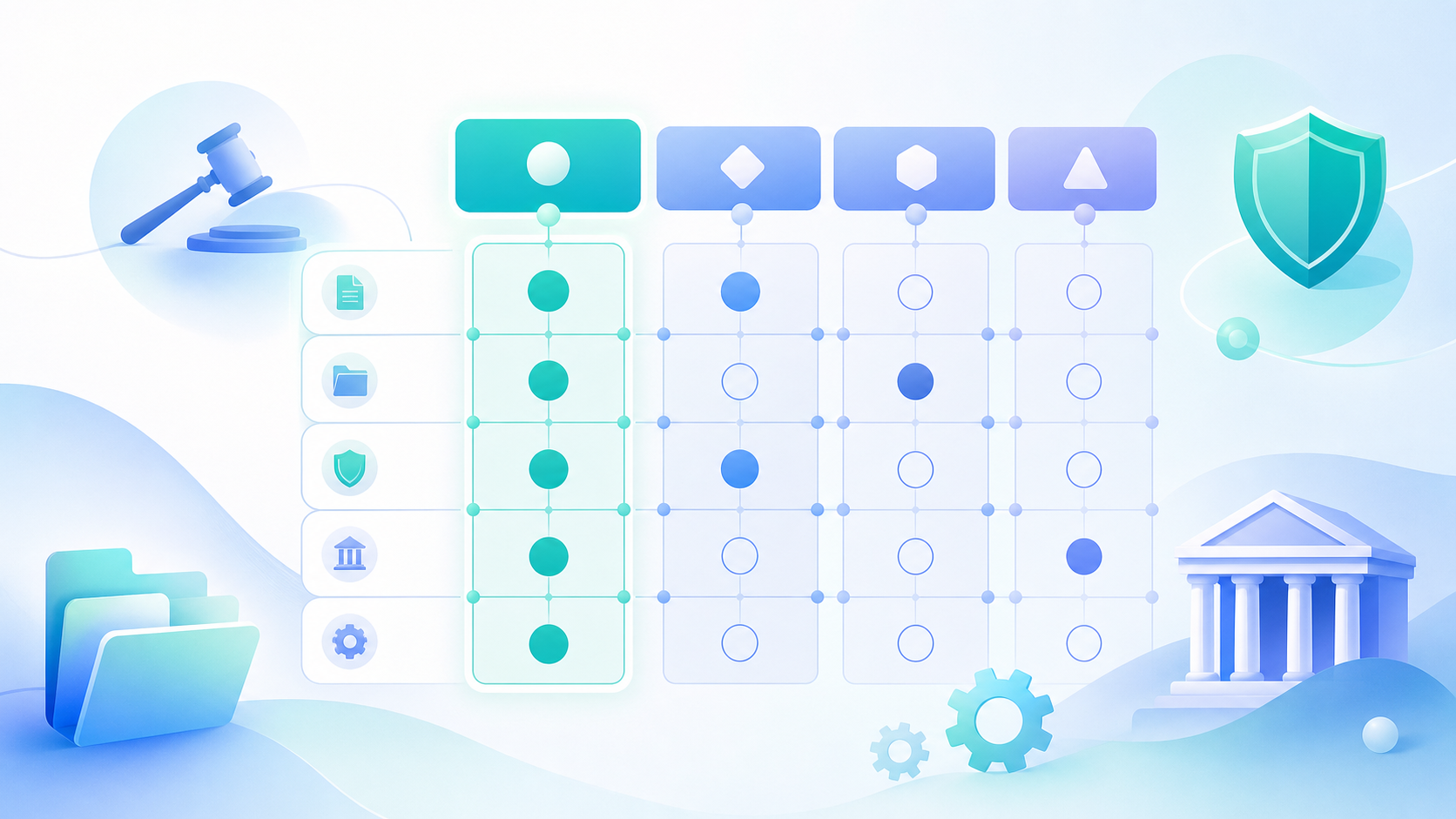
Feature | Glade AI | Harvey | CoCounsel | Lexis+ with Protégé | Clio | MyCase |
|---|---|---|---|---|---|---|
End-to-end case automation (intake to filing) | Yes | No | No | No | No | No |
Native document parsing and schedule population | Yes | No | No | No | No | No |
Deterministic court-filed calculations | Yes | No | No | No | No | No |
Direct court e-filing integration | Yes | No | No | No | No | No |
Native payments and AR | Yes | No | No | No | Yes | Yes |
Implementation time | Days | Weeks | Weeks | Weeks | Weeks | Weeks |
Why Glade AI Outperforms Other Legal AI Systems for High-Volume Firms
The other tools here do one part of the job well. Research assistants and drafting copilots answer questions and produce first drafts. Horizontal management systems handle matters and billing with AI added later. None run a high-volume case from intake through filing in one unified system.
Glade AI does, because AI is the foundation, not a bolt-on. Messy documents get parsed by Glade's document agent; court-filed math like the means test runs on deterministic, rule-based logic that stays auditable. Attorneys keep the decision seat through human-in-the-loop review, with source provenance on every field. That foundation is what separates a point tool from a system, so weigh whether your busiest case type needs one that runs the full lifecycle before you commit.
Final Thoughts on Legal AI Systems for High-Volume Firms
Pick the tool that matches your highest-volume case type, then confirm it covers filing before you commit. Look at how each tool handles your busiest work first, then decide from there. See how Glade automates intake through filing when you book a demo.
FAQs
Is Glade AI or Harvey the better fit for a high-volume bankruptcy firm?
Harvey works well for large firms and in-house teams that want drafting, contract review, and legal research grounded in cited sources. For running a bankruptcy case from intake through PACER filing in one system, Glade AI covers the full lifecycle, while Harvey stops at research and drafting.
How do I choose between Glade AI, Clio, and MyCase for my firm?
Clio and MyCase are horizontal case management systems with AI layered on, which suits general-practice and smaller firms managing mixed caseloads. If your caseload skews heavily toward bankruptcy and you need native schedule population, deterministic means-test math, and direct court filing, choose Glade AI over a horizontal system configured to approximate those workflows.
Which legal AI tool should I start with if I just need research and drafting?
Start with CoCounsel or Lexis+ with Protégé if authoritative research and cited drafting are your priority, since both tie directly to deep content libraries (Westlaw and LexisNexis). These focus on research and drafting, so pair them with a case system if you also need intake, payments, and filing.
Does Glade AI file directly to court, and does that work everywhere?
Glade AI files bankruptcy petitions to federal courts through PACER end to end, running asynchronously without the attorney at the keyboard. Automated e-filing runs in supported districts only, so confirm your district is covered before mapping filing automation into your workflow.
Why does Glade AI run court-filed calculations differently from AI drafting tools?
Glade AI parses messy documents with AI but runs court-filed math like the means test on deterministic, rule-based logic, so every result is auditable and court-defensible. This split keeps statutory calculations reproducible instead of variable, which matters when a filing has to hold up in court.