
How to Stop Leaving Money on the Table: Payment Gates and Plan Automation for Bankruptcy Attorneys (June 2026)

Your paralegal is two weeks into chasing a client who promised the final retainer installment before filing, the Chapter 7 petition sits ready to go in a draft folder, and you're staring at a stack of cases that should have closed last month but didn't because someone forgot to check if the plan payments actually cleared. Clients need flexible payment terms, but without workflow gates tying case progression to cleared balances, your firm ends up carrying receivables and burning admin hours instead of filing cases.
TLDR:
- 14% of law firm billing goes uncollected, with 44% of write-offs from clients who lacked funds upfront.
- Chapter 7 requires full payment before filing; Chapter 13 allows $500-$1,500 down and rolls the rest into the trustee-managed plan.
- Payment gates freeze case progression until specific dollar thresholds clear, stopping write-offs before they grow.
- Automating recurring charges eliminates manual collection calls and frees paralegal hours for filing prep.
- Glade ties payment gates directly to case workflows so the next step fires only when the balance clears.
Why Bankruptcy Clients Need Payment Plans
A client sits across the consultation table already drowning in debt, and now you have to explain the retainer. That conversation is where bankruptcy practices lose work they should be winning. The Clio Legal Trends Report found that 14% of law firm billing goes uncollected, with 44% of write-offs tracing back to clients who did not have the money. PYMNTS reporting (2024) puts roughly 166 million Americans living paycheck to paycheck, and the picture sharpens: the people most likely to need Chapter 7 or Chapter 13 protection are the same ones who cannot front a four-figure retainer in one check. Payment flexibility closes that gap before the money talk kills the engagement.
How Payment Plans Work for Bankruptcy Cases
Chapter 7 and Chapter 13 work differently at the cash register, and that mechanic is what most clients searching "do lawyers do payment plans" actually want explained.
Chapter 7: paid in full before filing
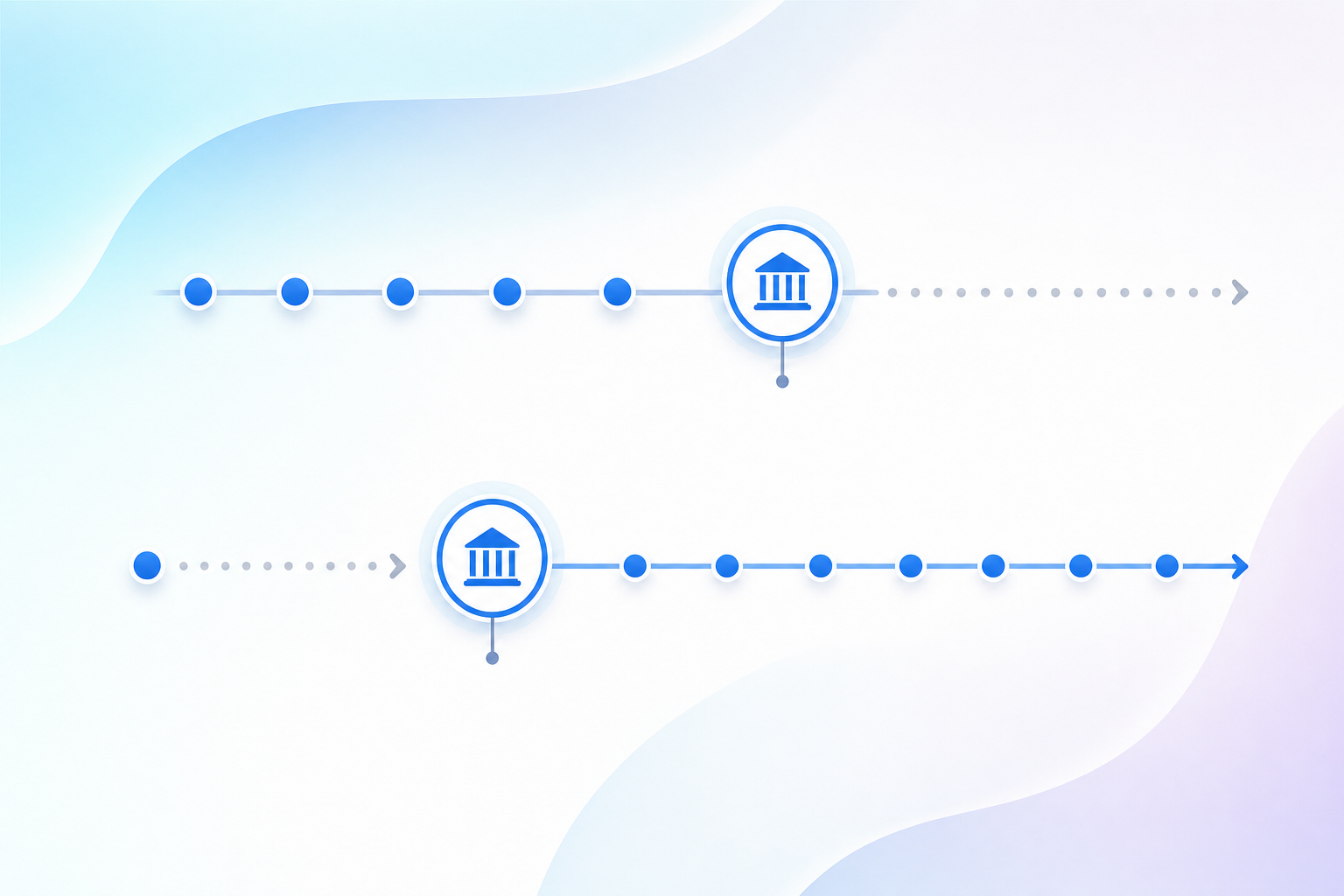
For Chapter 7, the retainer has to land in your account before the petition hits PACER. Any fee billed after the filing date becomes a pre-petition debt and gets discharged with everything else. Most firms work around this with pre-filing installment plans, collecting the retainer in 4 to 6 weekly or biweekly payments during document gathering. The case sits in prep status until the balance clears, then files.
Chapter 13: small down, rest through the plan
Chapter 13 gives you more room. Clients typically pay $500 to $1,500 upfront, and the balance of attorney fees rolls into the 36 or 60 month repayment plan administered by the trustee.
Third-Party Legal Fee Financing vs Firm-Direct Payment Plans
Spreading legal costs across months comes down to two structural choices: route the client through a lender, or carry the balance on your own books.
Third-party financiers like Affirm and LawFi pay the firm in full at engagement, then collect from the client over 12 to 24 months. Firm-direct plans keep the client relationship intact but park the receivable on your balance sheet.
Dimension | Third-Party Financing | Firm-Direct Payment Plan |
|---|---|---|
Cash to firm | 100% upfront, minus fees | Collected over time |
Default risk | Lender carries it | Firm carries it |
Client credit check | Usually required | Optional |
Admin overhead | Minimal after funding | Ongoing reminders |
Best fit | Higher-fee Chapter 13 | Bifurcated Chapter 7 |
Firms that offer installment options generally report higher profitability and stronger collection rates, since fewer engagements stall on an upfront lump sum. Many bankruptcy practices run a hybrid with bankruptcy software: third-party for clients who qualify, firm-direct for the rest.
Payment Gates: Tying Case Progression to Payment Milestones
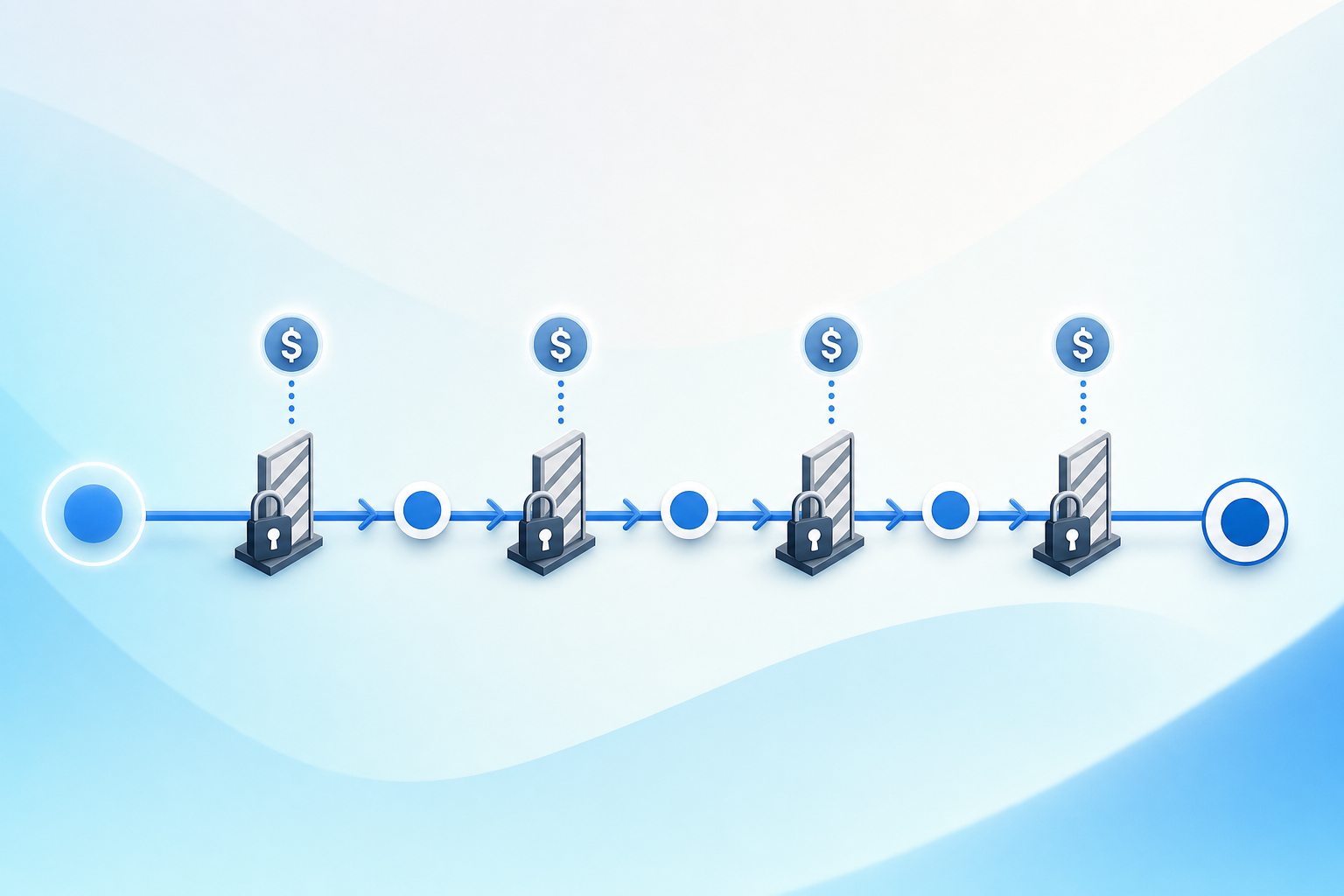
A payment gate is a hard stop inside the case workflow that refuses to advance until a set dollar amount or percentage of the retainer has cleared. Set it once at intake, and the system stops chasing money for you.
Common gate placements for a Chapter 7 bifurcated retainer:
- 25% collected before credit counseling enrollment fires
- 50% collected before questionnaire pre-fill kicks off
- 100% pre-filing portion collected before the petition draft compiles
- Post-filing balance gated against debtor education completion
Paying clients move forward on their own schedule. Non-paying files freeze in place instead of burning paralegal time, keeping write-off exposure tied to the gate threshold instead of the full retainer.
Automating Recurring Payments to Reduce Administrative Burden
Manual collections eat paralegal hours that should be moving cases forward with legal workflow automation. Card-on-file authorization turns the payment plan into a background process: the schedule runs on its scheduled date, the charge hits, the receipt fires, and the case ledger updates without anyone opening QuickBooks. Recurring auto-charge arrangements tend to lift on-time payment rates over invoice-and-wait billing, because the friction of "client has to remember and act" disappears.
What automation absorbs:
- Failed-card retries and dunning emails on a fixed cadence
- ACH and card receipts attached to the matter automatically
- Trust-to-operating transfers logged as fees are earned
- Past-due alerts routed to the assigned paralegal, not the attorney
Hours that went to collections calls go back to filing prep.
Setting Payment Plan Terms: Balancing Access and Cash Flow
Plan terms either keep cases moving or strangle your cash flow. The dials worth setting deliberately:
- Down payment: 20 to 33% of the retainer, enough to cover hard costs (filing fee, credit pull, counseling) before work starts
- Frequency: biweekly tracks paydays for hourly clients; monthly suits salaried filers
- Monthly amount: bankruptcy plans typically run $50 to $500, sized to the client's post-budget disposable income
- Duration: cap pre-filing plans at 90 days so Chapter 7 cases do not stall
- Grace period: 5 to 7 days before a missed charge triggers the late-fee workflow
Choosing among these dials comes down to two questions: how much runway your firm carries and how steady the client's income looks. A client with a salaried W-2 and a clean budget can take a longer monthly plan with a smaller down payment, because the default risk is low and you can afford to wait. A client with irregular or cash income is the one you bias toward a higher down payment, biweekly charges tracking paydays, and a shorter duration, since each missed cycle is a likelier write-off. Before extending longer terms, check your own runway. If three months of payroll is not in operating, shorten plans or push borderline clients to third-party financing so the receivable sits on a lender's books instead of yours.
Ethical and Compliance Considerations for Attorney Payment Plans
Payment flexibility lives inside a fence of bar rules, and stepping over them turns a collections problem into a discipline problem.
- Reasonable fees: ABA Model Rule 1.5 governs total fee structure; installment terms do not exempt the underlying amount from reasonableness review
- IOLTA handling: unearned advance payments belong in trust until fees are earned, including installments collected pre-filing on a Chapter 7 retainer
- Written fee agreements: most states require signed engagement letters spelling out the plan amount, schedule, late-fee policy, and refund triggers
- Interest and finance charges: several jurisdictions bar attorneys from charging interest on past-due balances absent client consent and disclosure
- Discharge conflict: never run a client's card for fees that will be discharged in their own bankruptcy; the payment becomes a preference and an ethics flag
Document the consent. File it with the matter.
Why Payment Flexibility Drives Client Retention and Referrals
Payment plans are a retention lever wearing a billing disguise. Research from LeanLaw notes that a 5% bump in client retention can lift firm profits by 25% to 95%, and bankruptcy clients who finish their case under a workable plan are the same people writing the Google review and sending their cousin in for a Chapter 13 consultation.
The intake math reinforces it. Most prospective clients weigh payment flexibility when picking counsel, which is why "affordable attorneys near me" outranks raw "bankruptcy attorney" searches in most metros.
Offering a plan during a debt consultation also reads as empathy. Clients remember which firm treated them like a budget instead of a balance sheet, and they refer accordingly.
Payment Plan Automation with Glade AI for Bankruptcy Practices
Inside Glade, the payment plan stops being a separate spreadsheet and becomes a property of the case itself. Book a demo to see how it works. Native payments live next to the petition workflow, so the same record holding Schedule D also holds the card on file, the installment schedule, and the gate deciding whether the next step fires.
Where that matters in practice:
- Payment Gates accept a fixed dollar amount or a percentage of the retainer, assignable to a specific contact on joint filings
- A gate clearing fires the next workflow step automatically: document request, e-signature packet, credit counseling enrollment, or petition draft compilation
- Bifurcated retainers split cleanly into pre-filing and post-filing invoices, each with its own plan and gate
- The Invoice API surfaces original versus deferred payment dates, keeping deferred Chapter 7 post-filing balances visible without manual reconciliation
- Plan status feeds the same reporting that tracks AR velocity and conversion, so collections health sits in the dashboard next to filing volume
Intake capacity grows without adding a collections clerk for every ten new matters per month.
Final Thoughts on Making Payment Plans Work Without Adding Overhead
Payment plans let you serve clients who need bankruptcy protection but cannot afford a lump-sum retainer, and the right setup keeps those plans from becoming a collections nightmare. Gates freeze cases that stop paying, recurring charges eliminate follow-up calls, and clear pre-filing versus post-filing splits satisfy bar rules. To watch how payment gates and native billing live inside the petition workflow instead of a separate ledger, grab time with the team.
FAQ
Do lawyers do payment plans for bankruptcy cases?
Yes, most bankruptcy attorneys structure payment plans differently by chapter: Chapter 7 requires full payment before filing through pre-filing installments (typically 4-6 biweekly payments during document prep), while Chapter 13 allows a small down payment ($500-$1,500) with the balance rolling into the court-supervised repayment plan.
What are the best legal billing software options for law firms that handle bankruptcy cases?
Look at how each tool handles your highest-volume case type first. Card-on-file recurring charges, payment gates tied to workflow steps, and trust-to-operating transfers that log automatically save the most paralegal hours. Third-party integrations add overhead; systems built for bankruptcy workflows keep everything in one ledger.
Can payment gates actually stop write-offs in bankruptcy practices?
Yes. Payment gates freeze case progression at set dollar thresholds (25%, 50%, or 100% of retainer collected) before the next workflow step fires: credit counseling enrollment, questionnaire pre-fill, or petition compilation. Non-paying cases stop consuming billable hours automatically, keeping write-off exposure tied to the gate amount instead of the full retainer value.
How do bifurcated Chapter 7 retainers work with payment plans?
Bifurcated retainers split into separate pre-filing and post-filing invoices, each with its own payment schedule and gate. The pre-filing portion must clear completely before the petition hits PACER (to avoid discharge issues), while the post-filing balance can be collected over 30-90 days after discharge.
What is the fastest way to automate recurring payments without hiring a collections clerk?
Card-on-file authorization turns payment plans into background processes: charges run on schedule, receipts attach to the matter automatically, failed-card retries fire on a fixed cadence, and past-due alerts route to the assigned paralegal. Systems that tie payment status directly to workflow gates let intake capacity grow without adding collections headcount for every ten new matters per month.