
Glade AI or Lawmatics: Which Platform Fits Your Firm? October 2026
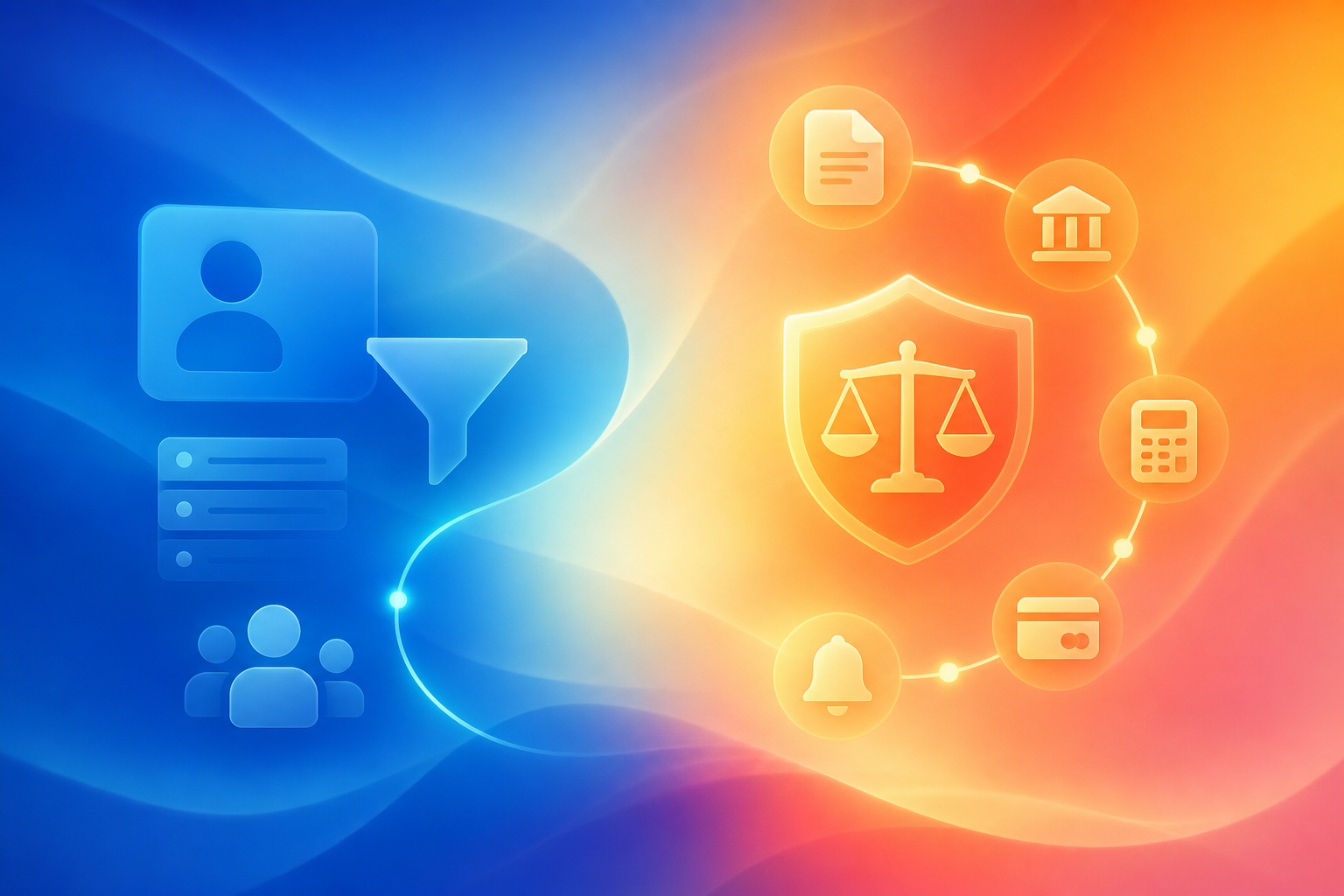
When a PACER notice lands, who on your staff checks the inbox and remembers to trigger the follow-up? That daily watch is one of the real dividing lines between a front-end legal CRM and a system built for Chapter 13. One tracks client relationships across practice areas. The other classifies notices across districts and routes the work on its own. We looked at where each fits so you can pick the one your paralegals can run without you.
TLDR:
- Lawmatics suits multi-practice firms whose main gap is lead capture, nurture, and intake.
- Front-end CRMs hand off at signing, so client facts get re-keyed into a separate case system.
- Glade runs one lifecycle (Intake, Collect, Create, File, Post-Filing) with no double entry.
- Glade's deterministic engine owns the means test and Form 122, keeping math auditable, not AI-guessed.
- Glade collapses 8-plus hour petition assembly into roughly 2 hours across Chapter 7 and 13.
What is Lawmatics?
Lawmatics is a legal CRM and client-intake product that law firms use to manage the pre-client lifecycle. It handles lead capture, marketing automation, intake forms, and ongoing client relationship tracking, serving firms that want marketing and intake tooling across practice areas.
What is Glade AI?
Glade AI is an AI-powered operating system for law firms built bankruptcy-first, serving high-volume consumer bankruptcy practices end to end: intake, document collection, client communication, native payments, petition preparation, e-filing, and post-filing court-notice management. Its Case Intelligence promise is simple: your case file builds itself as the work happens, across Chapter 7 and Chapter 13.
Intake and Lead-to-Case Handoff
Lawmatics does its heaviest lifting before the retainer is signed. Lead capture, nurture sequences, intake forms, and relationship tracking all sit in the pre-client stretch, and for a firm whose main gap is marketing and intake, that focus is a reasonable fit.
The friction shows up at the handoff. When the pre-client workflow hands off to a separate case system at signing, the same client facts get re-entered, and your firm maintains two sources of truth that drift apart.
Glade runs AI in bankruptcy law as one continuous lifecycle instead: Intake, Collect, Create, File, Post-Filing. Intake data lands in the canonical case record the moment a case starts, then propagates downstream to the questionnaire, schedules, and petition without anyone keying it twice. The signed retainer is a step inside the same system, not a wall your paralegals carry data across.
Post-Signing Case Management and Workflow Automation
Marketing and intake are the front door. The work that consumes a firm sits past the retainer: document collection, petition assembly, court deadlines, payment follow-up. Lawmatics tracks client relationships well and suits multi-practice firms that need intake and nurture across case types. The boundary shows up when a bankruptcy practice asks a horizontal CRM configured for bankruptcy to run case work it was never built around.
As a custom-built AI solution for bankruptcy firms, Glade's workflow engine waits on real client events instead of static task lists. Triggers fire when a questionnaire is completed, a document is uploaded, or a payment clears. Actions send messages, request documents and e-signatures, generate PDFs, and chain downstream workflows.
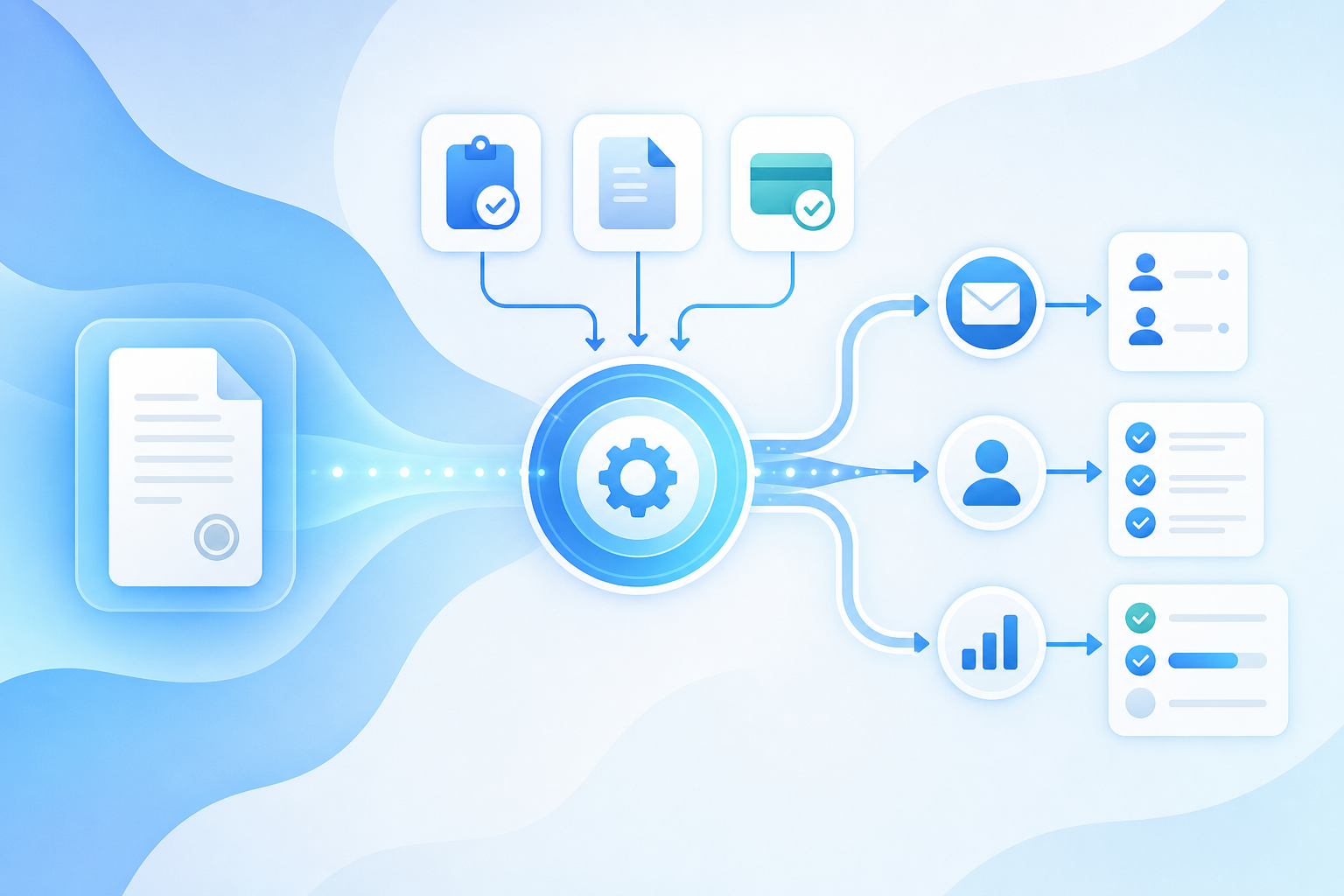
For Chapter 13 practices, court-notice automation is the anchor. PACER bankruptcy noticing center emails arrive across federal districts and must be classified and acted on quickly. Glade takes that on automatically. Incoming notices get classified, then route emails, tasks, and status changes on their own as part of end-to-end bankruptcy filings with Glade AI agents, so no one watches an inbox.
Bankruptcy-Specific Calculations and Petition Preparation
Lawmatics handles general-practice intake across case types, and firms wanting marketing and client capture get real value there. The boundary is calculation. A firm that needs to compute means-test figures, exemptions, and schedule totals runs those numbers in a separate schedules tool, so client facts get re-entered between systems.
Glade splits the work by architecture. Specialized service agents for bankruptcy parse the messy front end: paystubs, credit reports, bank statements in inconsistent formats. A separate deterministic, rule-based engine owns the statutory math, including the means test and Form 122. The means test is deterministic calculation, never AI inference, so every result is reproducible and auditable back to the rule that fired. Attorneys review every critical decision.

That split compresses petition assembly into a fraction of the manual time. AI agents typically pre-populate up to 50 to 75 percent of questionnaire fields before paralegal review, echoing how one firm reworked its workflow with Glade.
Client Portal, Native Payments, and AI in Daily Workflows
Lawmatics gives firms intake forms built for front-end engagement, capturing and converting leads well. The fit question is what happens after signing, when clients need to upload documents, track status, and pay over months.
Glade's client portal is mobile-optimized for the reality that most consumer debtors log in from a phone. Clients photograph documents, convert them to PDF, and get real-time validation feedback on whether an upload is correct or needs resubmission, instead of waiting days for a paralegal to email back. Status tracking runs through closure.
Native payments are built in, not a separate billing tool. Staff initiate installment plans for clients in active financial distress, and payment reminders dispatch automatically, much like how Glade makes collecting payment easy for other bankruptcy firms.
AI agents run in production throughout: document analysis, classification, extraction, and task routing. Firms running client portal software have reported notable reductions in inbound calls and client emails, part of a broader push to reduce manual entry for bankruptcy firms.
Why Glade AI Outperforms a Front-End Legal CRM for Bankruptcy Case Management
If your firm spans several practice areas and the gap you feel most is marketing and intake, Lawmatics is a reasonable fit. It captures leads, runs nurture sequences, and tracks client relationships across case types without forcing you into one vertical.
A high-volume consumer bankruptcy firm has a different problem. The work that stalls you lives past the retainer, in schedules, deadlines, and payment follow-up. Glade is purpose-built for Chapter 7 and Chapter 13 bankruptcy case management, carries intake through post-filing in one unified system, and shows how AI-powered exemptions save time by running statutory calculations natively with deterministic math, keeping the attorney reviewing every critical decision. One record instead of two that drift apart.
Workflow dimension | Front-end legal CRM (Lawmatics) | Glade AI |
|---|---|---|
Lifecycle coverage | Pre-client stretch: lead capture, nurture, intake; hands off at signing | One continuous lifecycle: Intake, Collect, Create, File, Post-Filing |
Case record | Separate case system after signing, so client facts get re-keyed | Single canonical record; data propagates with no double entry |
Statutory calculations | Run in a separate schedules tool | Deterministic, rule-based engine owns the means test and Form 122, auditable |
Court-notice handling | General-purpose CRM; no built-in PACER notice classification or automatic routing | Classifies PACER notices across districts and routes work automatically |
Payments | Payment plan feature exists but many firms run payments through separate tools like LawPay in practice | Native payments with automatic reminders and installment plans |
Petition assembly time | 8-plus hours | Roughly 2 hours across Chapter 7 and 13 |
The table above reflects publicly available information as of June 2025. Lawmatics is a capable legal CRM that suits multi-practice firms; the comparison focuses on where the two products serve different buyer needs.
Start by looking at how each bankruptcy case management tool handles your highest-volume case type, then choose the system your paralegals can run without you. See how Glade automates the filing pipeline on the Glade bankruptcy page.
Final Thoughts: Glade AI vs. Lawmatics for Bankruptcy Firms
Start by looking at how each tool handles your highest-volume case type. Lawmatics suits firms whose biggest gap is marketing and intake, but a bankruptcy practice needs calculations, court notices, and payments handled natively in one place. Glade keeps the attorney reviewing every critical decision while the case file builds itself. If that fits your firm, book a demo to see it in action.
FAQs
How do I decide between Glade AI and Lawmatics for my firm?
Start by looking at where your work stalls: if the gap you feel most is marketing and intake across several practice areas, Lawmatics is a reasonable fit. If you run high-volume Chapter 7 and Chapter 13 cases and the friction lives past the retainer in schedules, deadlines, and payment follow-up, Glade carries intake through post-filing in one system built for that work.
Why does Glade AI keep one case record while Lawmatics hands off to a separate case system?
Lawmatics does its heaviest lifting in the pre-client stretch, so the signed retainer hands off to a separate case tool and the same client facts get re-entered across two sources of truth that drift apart. Glade runs one continuous lifecycle, Intake through Post-Filing, so data lands in the canonical case record once and propagates to the questionnaire, schedules, and petition without anyone keying it twice.
Can Lawmatics run bankruptcy-specific calculations like the means test and exemptions?
Lawmatics handles general-practice intake across case types and gives firms real value in marketing and client capture, but it was never built to compute means-test figures, exemptions, or schedule totals, so those numbers run in a separate schedules tool. Glade owns the statutory math natively through a deterministic, rule-based engine, so the means test is reproducible and auditable back to the rule that fired, never AI inference.
Who is Lawmatics best for, and who should choose Glade AI?
Lawmatics suits multi-practice firms whose main need is lead capture, nurture sequences, and client relationship tracking across case types. Glade is purpose-built for high-volume consumer bankruptcy firms running Chapter 7 and Chapter 13 that need petition prep, native payments, e-filing, and court-notice automation in one system their paralegals can run without the attorney in the loop for every step.
Is Glade AI's e-filing available in my district?
Glade's end-to-end PACER filing runs in a set of supported federal bankruptcy districts, and courts outside that list require manual PACER submission. Check your highest-volume court against Glade's current supported-district coverage on the Glade bankruptcy page before counting on automated filing for your jurisdiction.